

The Last Days of a Dictator
 The last days of a dictator are not particularly fun. Hitler committed suicide in 1945 when the Russians were close to his underground bunker in Berlin. Saddam Hussein loved life too much and come out of a hole in the ground when guns had surrounded him. I am not sure about Qaddafi’s attitude toward his own life. Did he remain defiant until the end or were his captors simply more aggressive then the soldiers who found Saddam? Putting the body of a killed dictator in the freezer of a grocery store strikes me as a novel way to preserve it for a few days. People could come and look at the brutal end. Unfortunately, these pictures will not deter other would-be dictators because at the core they are not guided by reason but by delusion.
In His Last Days, Qaddafi Wearied of Fugitive’s Life By KAREEM FAHIM (NY Times)
MISURATA, Libya—After 42 years of absolute power in Libya, Col. Muammar el-Qaddafi spent his last days hovering between defiance and delusion, surviving on rice and pasta his guards scrounged from the emptied civilian houses he moved between every few days, according to a senior security official captured with him.
A Story that you will not forget
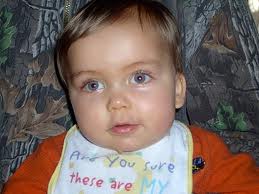 Even for someone who reads a lot this story will stand out and stay burned in your memory if you have children or consider having them in the future
Notes From a Dragon Mom By EMILY RAPP (NT Times)
MY son, Ronan, looks at me and raises one eyebrow. His eyes are bright and focused. Ronan means “little seal” in Irish and it suits him. I want to stop here, before the dreadful hitch: my son is 18 months old and will likely die before his third birthday. Ronan was born with Tay-Sachs, a rare genetic disorder. He is slowly regressing into a vegetative state. He’ll become paralyzed, experience seizures, lose all of his senses before he dies. There is no treatment and no cure..
The Sound of Music
 To get in the spirit of Octoberfest, I watched the iconic romantic musical for a second time in my life. The mountains around Salzburg are still amazing but the film has aged less well than My Fair Lady. Too often you notice that the scene is shot in a Hollywood rather than on location in Salzburg. Our eyes have become too discerning about simple tricks in the art of making movies. There will be a remake of My Fair Lady coming out soon and I would welcome a remake of The Sound of Music. But the audience nowadays for a new version of the Trapp family story may be smaller than the more ageless theme and spectacular writing in My Fair Lady.

The Limits of Empathy
 David Brooks describes in the NY Times his key lessons from reading Steven Pinker’s new book.
We are surrounded by people trying to make the world a better place. Peace activists bring enemies together so they can get to know one another and feel each other’s pain. School leaders try to attract a diverse set of students so each can understand what it’s like to walk in the others’ shoes. Religious and community groups try to cultivate empathy. As Steven Pinker writes in his mind-altering new book, “The Better Angels of Our Nature,” we are living in the middle of an “empathy craze.” There are shelfloads of books about it: “The Age of Empathy,” “The Empathy Gap,” “The Empathic Civilization,” “Teaching Empathy.” There’s even a brain theory that we have mirror neurons in our heads that enable us to feel what’s in other people’s heads and that these neurons lead to sympathetic care and moral action.
Continue Reading
Two Lovers
 I had not seen the poster for the film because otherwise I would have noticed that Two Lovers is not about two people. During the film you realize it is about at least 3, possible 4 people, who are trying to figure out who they want to be with. We all know that this is not an easy question and some of us are a lot better in figuring it out. Two Lovers is nothing like The Lover which indulges in sexy cinematography. Here the existential problem of sorting through all the conflicting impulses is in foreground. The director does not seduce you with romantic landscapes and enticing human bodies but rather uses the rather dreary background of a Brooklyn apartment building to stage a drama of the human heart. This is not a film you have to see but if you do see it, you will agree that it manages to penetrate the human condition much more deeply than your typical romantic comedy.
Irene shuts down NYC
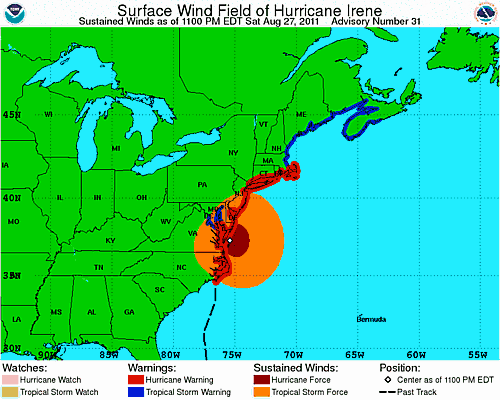
By SAMANTHA GROSS and LARRY NEUMEISTER, Associated Press reports.
NEW YORK—The normally bustling streets emptied out and the rumble of the subways came to a stop.
New York buttoned up Saturday against Hurricane Irene, which threatened to paralyze Wall Street and give the big city its worst thrashing from a storm since at least the 1980s.
City officials cautioned that if Irene stayed on track, it could bring gusts of 85 mph overnight that could shatter skyscraper windows. They said there was an outside chance that a storm surge in Lower Manhattan could send seawater streaming into the maze of underground vaults that hold the city’s cables and pipes, knocking out power to thousands and crippling the nation’s financial capital.
Broken Embraces
 Pedro Almadovar surprises you again with Broken Embraces. Unlike Woody Allen who now makes the same movie over and over again, Almadovar in all his recent films has broken new ground in his quest to lay bare before our eyes the variety in the human experience. During the first hour I wondered where the film was going and feared that Almadovar was following perhaps in Woody Allen’s recent footsteps. But then the movie takes a turn for the expected and pace accelerates, leaving you breathless about the turn of events. Almadovar has constructed a tragic mystery that nonetheless lifts your spirit because you realize that—however fleeting happiness with another person may be—one second of it may nourish you for eternity.
Continue Reading

© 2026 Peter Murmann. Powered by ExpressionEngine.
